90 Days to Results & Growth

Why Quarterly Planning Works: The Power of 90 Days
Running a business means there is always something competing for your attention. Customers need responses. Emails pile up. Bookkeeping needs to be updated. Marketing needs to happen. Problems need to be solved. And somewhere in the middle of all that, you’re also supposed to be working toward your bigger business goals.
That’s where quarterly planning can make a big difference. A year can feel too long. A month can feel too short. But 90 days gives you enough time to accomplish something meaningful while still being short enough to maintain focus, measure progress and adjust when necessary. Instead of trying to plan your entire year in detail, quarterly planning allows you to ask a much simpler question:
What are the most important things I want to accomplish in my business over the next 90 days?
Here’s why the 90-day approach works so well—and how you can use it in your own business.
1. A Year Is Too Long to Stay Focused
Annual goals are valuable because they give your business direction. The problem is that December can feel very far away when you’re sitting in January—or even August.
When a deadline is months away, it becomes easy to think: I have lots of time.
That often leads to putting important projects off while everyday tasks take priority. Breaking annual goals into 90-day targets creates a much closer deadline. There is enough urgency to encourage action without making the goal feel impossible.
Instead of: “I want to increase revenue this year.” Your quarterly goal might become: “Increase monthly revenue by 10% over the next 90 days.” Now you have something specific to work toward.

2. Ninety Days Is Long Enough to Create Real Results
Thirty days can be useful for creating a new habit or completing a small project, but many meaningful business goals require more time.
In 90 days, you could potentially:
- Launch a new service
- Improve your bookkeeping system
- Build a consistent marketing routine
- Increase your customer base
- Improve your website
- Create better business processes
- Reduce outstanding accounts receivable
- Develop a referral strategy
- Organize your financial records
- Improve your profit margins
- Build a stronger social media presence
- Complete a major business project
Three months gives you time to plan, implement, measure and improve. That is where quarterly planning becomes powerful. You’re not simply setting goals—you are giving yourself enough time to produce measurable results.

3. It Forces You to Prioritize
One of the biggest challenges for small-business owners isn’t a lack of ideas. It’s having too many ideas at once. You may want to increase sales, redesign your website, improve social media, start a newsletter, introduce a new service, organize your books and create better systems.
Trying to accomplish everything at the same time usually results in scattered attention. Quarterly planning forces you to decide: What matters most right now?
Choose one to three major priorities for the quarter. Everything else doesn’t have to disappear. It simply doesn’t get the same level of attention during these 90 days. Focus creates momentum.

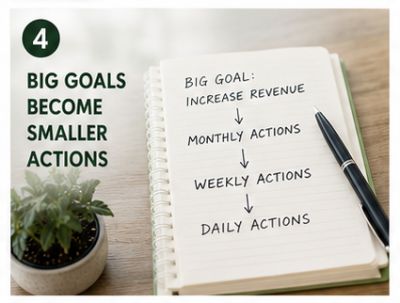
4. Big Goals Become Smaller Actions
A goal becomes much easier to achieve when you break it into smaller pieces. Suppose your quarterly goal is: Increase revenue by 15%. Instead of simply hoping revenue increases, determine what actions could actually create that result.
For example: Quarterly Goal: Increase revenue by 15%
Monthly Actions:
- Introduce one new service
- Contact previous customers
- Create a referral offer
- Increase marketing activity
Weekly Actions:
- Follow up with five potential customers
- Publish three social media posts
- Reach out to two referral partners
- Review weekly sales numbers
Now your goal isn’t something you think about occasionally. It becomes part of what you actually do each week.
5. You Can Measure Progress More Frequently
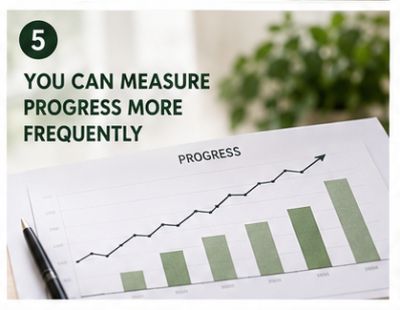
One of the biggest benefits of quarterly planning is that it creates natural opportunities to review your business. Every 90 days, you can ask:
- What did we accomplish?
- What worked?
- What didn’t work?
- Did revenue increase?
- Did expenses change?
- Did profit improve?
- Did cash flow improve?
- Are customers paying faster?
- Which marketing efforts produced results?
- What should we continue?
- What should we stop doing?
- What should we change next quarter?
Without regular reviews, business owners can spend months repeating activities that aren’t producing results. Quarterly reviews create a regular feedback loop.
Plan → Take Action → Measure → Adjust → Repeat
6. Quarterly Planning Connects Goals to Your Numbers
Your financial reports shouldn’t only be something you look at during tax season. They can help you determine whether your business plans are actually working. At the beginning of each quarter, establish a few financial targets.
Depending on your business, you might track:
Revenue: How much do you want to generate?
Expenses: Are there costs you want to reduce or control?
Profit: How much do you want the business to keep after expenses?
Cash: How much cash should the business have available?
Accounts Receivable: How much money is currently owed to you?
Then review those numbers throughout the quarter. When your bookkeeping is current, you can compare your goals with what is actually happening in the business—and make decisions before small problems become larger ones.

7. You Can Adjust Before an Entire Year Passes
Business rarely goes exactly according to plan. Customers change. Costs increase. New opportunities appear. Marketing strategies stop working. Unexpected expenses happen. A yearly plan shouldn’t become something you follow blindly simply because you created it in January.
Quarterly planning gives you four opportunities every year to reassess. Maybe something you thought would be important isn’t producing results. Maybe a new opportunity has appeared. Maybe your revenue is growing faster than expected and your next priority needs to be improving systems or hiring help.
Your quarterly plan gives you direction without locking you into decisions that no longer make sense.
8. Shorter Deadlines Create Accountability
Deadlines influence behaviour. When you know you have 90 days to accomplish something, it becomes easier to identify what needs to happen this month, this week and today.
That creates accountability. At the end of the quarter, the question becomes simple:
Did I accomplish what I said I was going to accomplish? If the answer is yes, determine what helped you succeed. If the answer is no, determine why.
Maybe the goal was unrealistic. Maybe too many priorities competed for your attention. Maybe you weren’t tracking progress. Or perhaps the weekly actions weren’t connected strongly enough to the result you wanted. Either way, you’ve learned something that can improve your next 90-day plan.

9. Quarterly Planning Helps You Work On Your Business
Small-business owners spend enormous amounts of time working in their businesses. Serving customers. Answering messages. Processing orders. Paying bills. Solving problems. Those things are necessary. But growing a stronger business also requires time spent working on the business.
Quarterly planning creates space to think about the bigger picture:
Where are we going?
What’s working?
What’s holding us back?
What should we improve?
What would make the business more profitable, organized or efficient?
Even a few hours spent planning every three months can help you become more intentional about where your time and money are going.

A Simple 90-Day Business Planning Framework
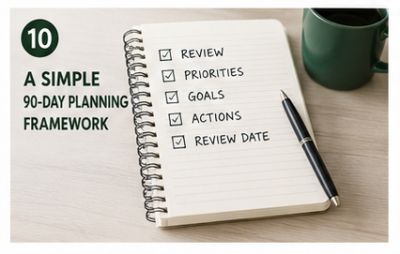
You don’t need a complicated planning system. At the beginning of each quarter, set aside some uninterrupted time and work through these five steps.
Step 1: Review the Previous 90 Days
Look at your financial results, completed projects, unfinished goals and major challenges. Ask yourself what worked—and what didn’t.
Step 2: Choose Your Top 1–3 Priorities
Avoid creating a list of 20 goals. Choose the few things that would make the biggest difference in your business over the next 90 days.
Step 3: Make Each Goal Measurable
Instead of: “Improve marketing.” Try: “Publish three pieces of content every week and generate 25 qualified leads this quarter.” Instead of: “Get better at bookkeeping.” Try: “Have all transactions categorized and accounts reconciled by the 10th of every month.” You should be able to clearly determine whether you achieved the goal.
Step 4: Break Each Goal Into Monthly and Weekly Actions
Ask: What needs to happen every month? Then: What needs to happen every week? Your weekly actions are where your quarterly plan becomes reality.
Step 5: Schedule a Quarterly Review
Put the review on your calendar now. At the end of the 90 days, review your goals, financial numbers and results before planning the next quarter.
Keep Your Plan Simple
Quarterly planning doesn’t need to involve complicated spreadsheets, lengthy meetings or a 50-page business plan. A simple one-page plan can be enough.
Write down:
1. My Top 3 Goals
2. The Numbers I’m Tracking
3. My Monthly Milestones
4. My Weekly Actions
5. My End-of-Quarter Review Date
Then keep that plan somewhere you’ll actually see it. The purpose isn’t to create the perfect plan. The purpose is to create focus.

90 Days Can Change a Business
A successful year is rarely the result of one giant breakthrough. It’s usually built through smaller periods of focused, consistent action. Think about what could happen if you completed just three meaningful business priorities every quarter.
- That’s potentially 12 significant improvements every year.
- Better systems.
- Stronger finances.
- More consistent marketing.
- Improved customer service.
- Higher revenue.
- Better profitability.
- More organization.
- The individual improvements may seem small, but over time they compound.
- That’s the advantage of quarterly planning.
90 days is long enough to accomplish something meaningful—but short enough to stay focused. Choose what matters most. Turn it into measurable goals. Break those goals into weekly actions. Track your numbers. Then, 90 days from now, review your progress and decide what comes next.